Essential Oils 101: What HECT Chemotyped Actually Means
7 July 2026 · By Naturespan
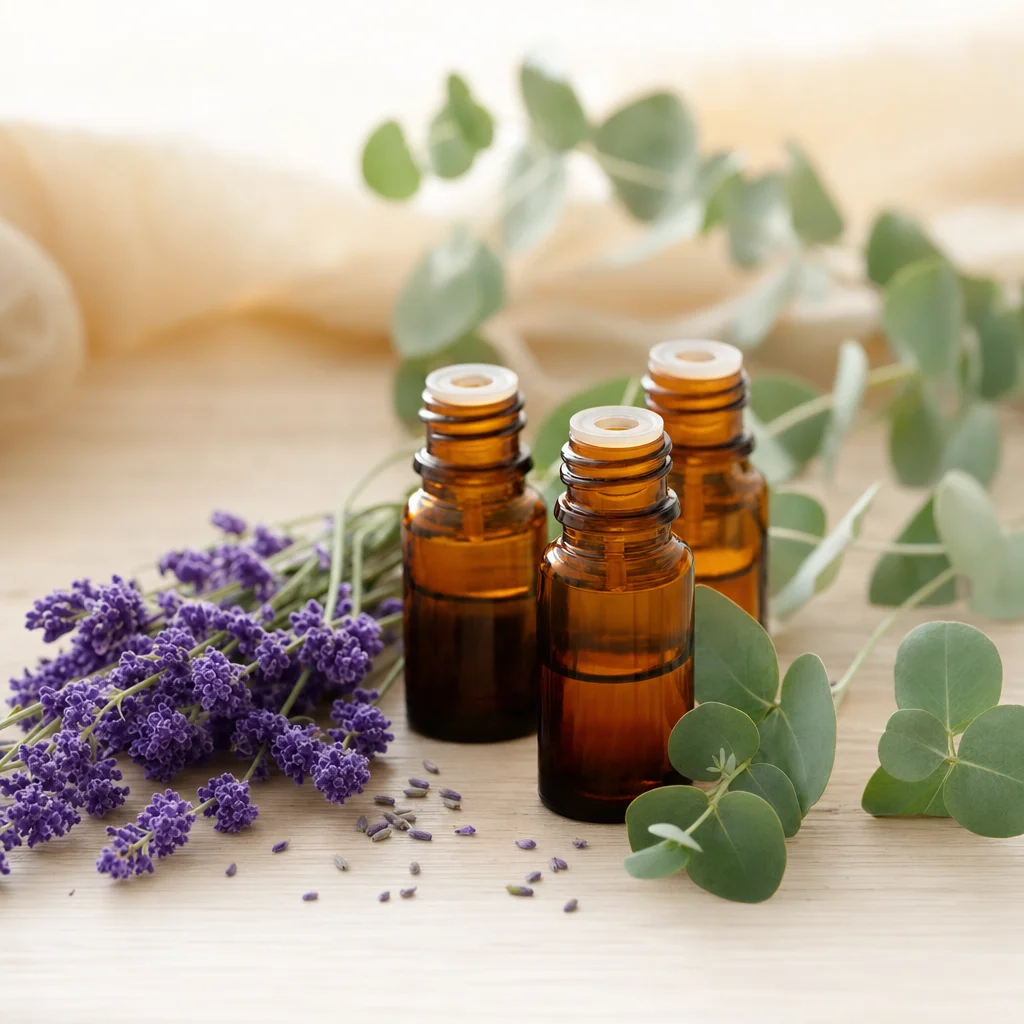
Pick up two bottles of rosemary essential oil. Same plant name, same size, similar deep green labels. One is dominated by camphor, the other by a completely different molecule called 1,8-cineole. They smell different, they behave differently, and the safety considerations are not the same. Yet both are legitimately labelled rosemary.
The missing word on the cheaper bottle is the chemotype, and understanding it is the single most useful thing you can learn before buying your first essential oil. This guide explains what chemotypes are, what Pranarom's HECT standard actually certifies, how to judge quality on any shelf, and the safety basics that every household using essential oils should know.
One thing before we start. This article is educational. It is not medical advice, and essential oils are not medicines or substitutes for treatment. If you are pregnant, breastfeeding, managing a health condition, or considering oils for a child, speak to your doctor or pharmacist first. Nothing here changes that.
What an Essential Oil Actually Is
An essential oil is the concentrated aromatic fraction of a plant, extracted almost always by steam distillation, or by cold pressing in the case of citrus peels. Concentrated is the key word. It can take enormous quantities of plant material to fill one small bottle, which is why a few drops carry so much intensity, and why essential oils demand more respect than almost anything else in a natural products shop.
That concentration is also why precision matters. When a plant's chemistry varies, the oil's chemistry varies with it, magnified.
What a Chemotype Is
Here is the concept in one sentence: the same botanical species can produce essential oils with meaningfully different chemical compositions depending on where and how the plant grows, and each distinct composition is called a chemotype.
Thyme is the classic example. Thymus vulgaris grown at low altitude in a hot, dry climate typically produces an oil rich in thymol, a powerful phenol that is also harsh on the skin. The same species grown in different conditions can yield an oil dominated by linalool, which is far gentler, or by thujanol. Botanically these are all thyme. Practically, they are different products with different uses and different safety profiles.
Rosemary tells the same story. Rosmarinus officinalis from North Africa tends toward the cineole chemotype, fresh and eucalyptus-like. Provence and Spain produce a camphor chemotype. Corsica is known for a verbenone chemotype. Three oils, one plant name.
Why does this matter to you? Because a recipe, a reference book, or a qualified aromatherapist will recommend a specific chemotype for a specific purpose, and because safety cautions often attach to particular molecules rather than to the plant name. A label that says only rosemary has not told you what is in the bottle.
What HECT Actually Means
HECT stands for Huile Essentielle ChémoTypée, chemotyped essential oil. It is the quality standard on which Pranarom, the Belgian aromatherapy house founded by a pharmacist, built its entire range, and it turns the chemotype concept into a labelling discipline.
A HECT oil is defined by three identifications, printed on the bottle:
- The exact botanical species, in Latin. Not lavender, but Lavandula angustifolia as opposed to Lavandula latifolia or the hybrid lavandin, which are different plants with different oils.
- The part of the plant distilled. Leaf, flower, bark, seed, zest, or root. The same tree can give several distinct oils. Bitter orange, for instance, yields different products from its zest, its leaves, and its blossom.
- The chemotype, established by laboratory analysis. Each batch is analysed by chromatography, so the dominant molecules are measured rather than assumed.
Alongside these identifications, the HECT standard requires the oil to be 100 percent pure, meaning not cut with other oils or solvents, 100 percent natural, meaning no synthetic fragrance molecules, and complete, meaning not stripped or rectified in ways that remove parts of the natural composition.
In short, HECT is a promise of precision. You know the species, the plant part, and the chemistry, batch by batch. That is why Pranarom is one of the eight European organic suppliers behind the Naturespan range, and why our essential oils shelf leans on the HECT standard.
How to Choose a Quality Essential Oil Anywhere
Whether you are shopping with us or anywhere else, the checklist is the same:
- Latin name on the label. No Latin name, no purchase. It is the first mark of a serious producer.
- Plant part stated. Flower, leaf, zest, and bark are different products.
- Chemotype declared for species where it matters, such as thyme and rosemary.
- Origin and batch number. Serious houses can trace every bottle to a distillation batch, and many publish or provide the analysis.
- Organic certification. The Eurofeuille or AB mark on an essential oil means the plants were grown without synthetic pesticides, which matters when a bottle concentrates so much plant material.
- Dark glass and a dropper cap. Essential oils degrade in light and plastic.
- Realistic pricing across the category. True rose or melissa oil requires vast amounts of plant material. A bargain bottle of a famously low-yield oil is almost certainly diluted or synthetic.
The Safety Basics
Essential oils are safe household tools when used with care and respect. The core rules:
Dilute before skin application. Essential oils are almost never applied neat. They are diluted in a carrier oil such as sweet almond, jojoba, or coconut. Many aromatherapy references suggest starting around 1 to 2 percent for everyday adult use, which is roughly 1 to 2 drops of essential oil per teaspoon of carrier. Less is genuinely more.
Patch test first. Apply a small amount of the diluted blend to the inside of the forearm and wait 24 hours before wider use.
Keep clear of eyes, ears, and mucous membranes. If an oil reaches the eye, wipe with a carrier oil, not water, and seek help if irritation persists.
Mind the sun with citrus. Cold-pressed citrus oils, bergamot especially, can make skin photosensitive. Avoid sun exposure on treated skin for at least 12 hours.
Children are not small adults. Many essential oils are unsuitable for young children, and menthol or cineole-rich oils such as peppermint and eucalyptus should never be applied near the face of babies or young children. Keep every bottle locked away from little hands, and take professional advice before using any oil on a child.
Pregnancy and breastfeeding call for caution. Many oils are not recommended during pregnancy, particularly in the first trimester. This is a conversation for your doctor or midwife, not a label.
Do not ingest without qualified guidance. Some traditions use oral aromatherapy, but only under the supervision of a trained professional. Swallowing essential oils casually is a genuine poisoning risk.
Existing conditions matter. Asthma, epilepsy, allergies, and ongoing medication can all change what is appropriate. When in doubt, ask a professional.
Store well. Cool, dark, upright, tightly closed, and out of reach of children. In the Mauritian climate, a cupboard away from heat is essential.
Why We Built Our Shelf Around HECT
There is no shortage of fragrant bottles in the world, and in a market with no local regulator, the essential oils category attracts more vague labelling than almost any other. Our answer is the same as everywhere else in the store: precision you can read. The Pranarom HECT range at Naturespan carries the Latin name, the plant part, the chemotype, and organic certification on the bottle, and our team is trained to help you match the right chemotype to your purpose, or to tell you honestly when the right answer is see a professional.
Come and explore the range in store from September 1, 2026, in Grand Baie and Tamarin, or write to [email protected] with your questions. Start with one well-chosen, properly labelled bottle, learn it thoroughly, and let precision, not perfume marketing, guide your aromatherapy journey.
Eating well is one part of a longer, healthier life. Explore the wider Healthspan health ecosystem.